September 9, 2026 · 6 min read
The building has its own license
DEA belongs to a practitioner. CLIA belongs to the laboratory. The operating license belongs to the building. When that file lives in a binder the owner never opens, the first warning is a locked door.
Owners
A lapse here closes the site.
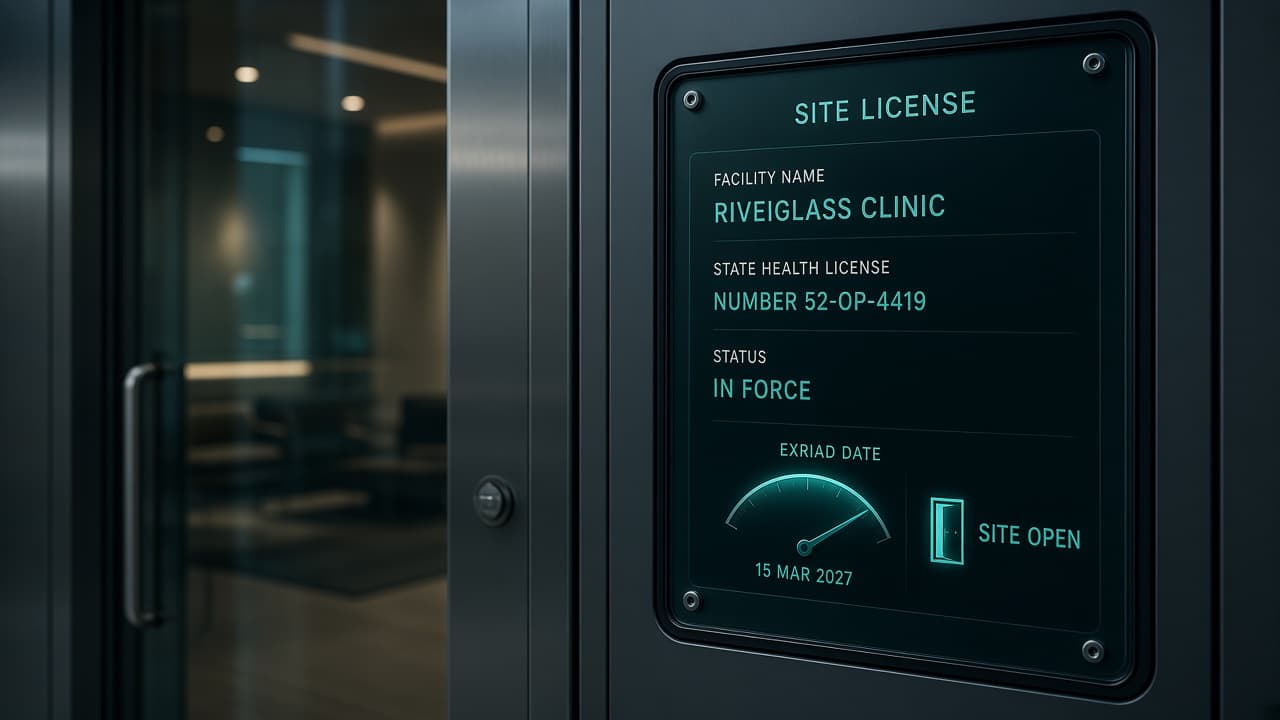
Someone keeps clinician licenses current and still misses the paper that lets the building stay open. State health licenses, specialized-center permits, occupancy credentials: they expire on different cycles from the people inside. They also close doors, not just a schedule.
This is not a CLIA story. The laboratory certificate pauses testing. This is not a DEA story. That registration belongs to a named practitioner. The operating license is the facility's own credential. Owners feel it as downtime. Operations feel it as a binder nobody wanted to open.
What the site has to hold
- Facility legal name as printed on the license
- Issuing authority: state health, local fire, specialized-center board
- License or permit number and the expiration on this file
- Who actually renews it, by name, not "the office"
If the people are current and the building is not, you do not have a covered facility. You have a covered staff in an unlicensed room.
Keep the site on the same calendar as the staff
Do not run occupancy in a city-hall folder that operations never sees. When the new license arrives, replace the same row. Print coverage that includes the building, not only the clinicians. An owner should be able to ask one question: can we open on Monday?
More notes
Questions
Is this the same as a lapsed DEA?
No. A DEA lapse stops controlled-substance prescribing for that practitioner. A facility license lapse can stop the site from operating. Track them as separate rows.
Does CalSafe file the state renewal?
No. It holds the license you store and the date your team confirmed. The board or health department still gets the renewal.