
August 26, 2026 · 6 min read
A lapsed DEA does not wait for the next staff meeting
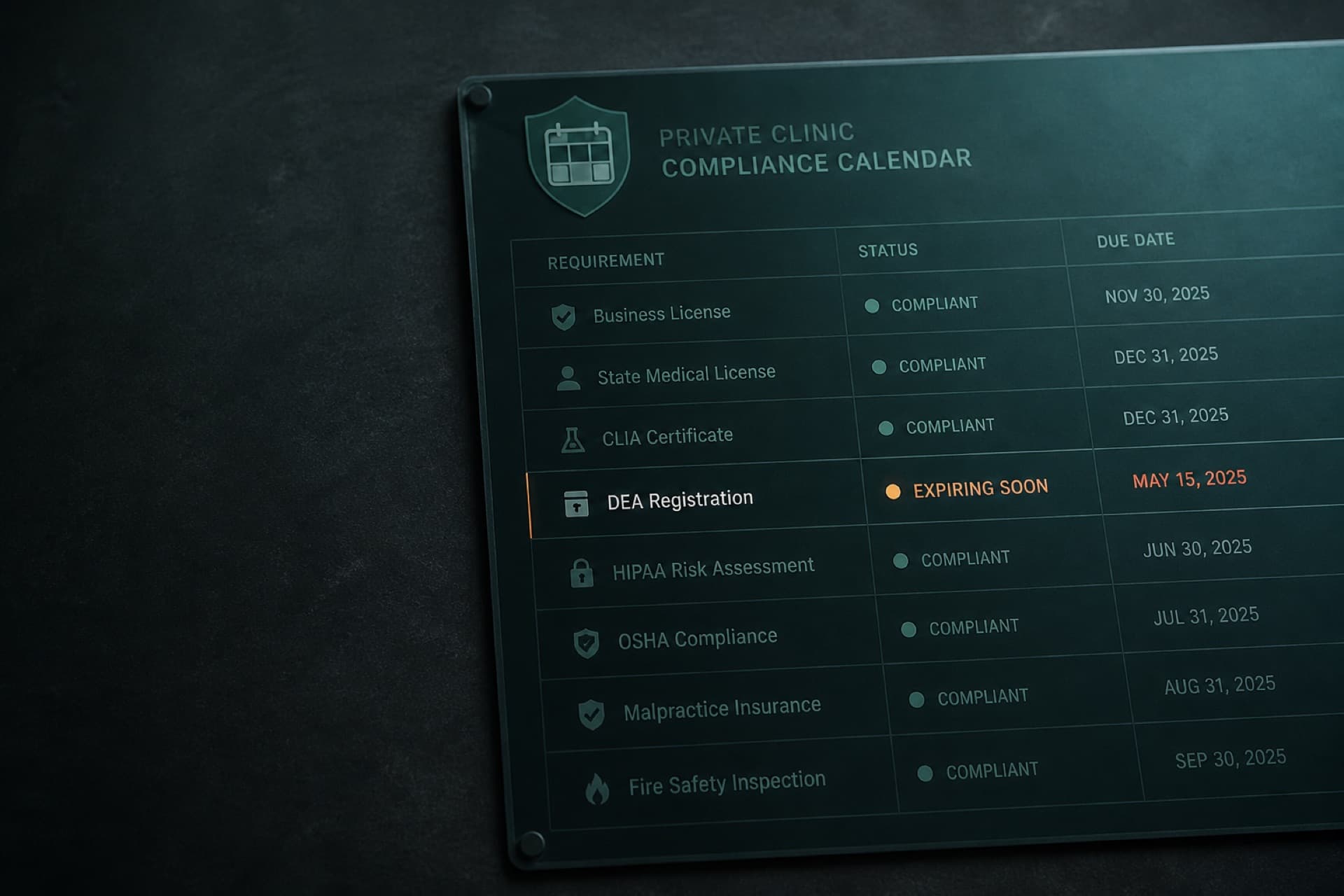
A DEA registration belongs to a practitioner. The clinic still has to know the date, keep the current certificate, and give someone enough warning to finish the renewal before prescribing stops.
Medical directors
The calendar has to move before the DEA does.
Facility licenses close doors. Malpractice gaps show up in credentialing. A lapsed DEA is quieter until someone needs a Schedule II and the registration is not there. That is not a spreadsheet inconvenience. That is a clinical stop.
Private clinics lose this in a specific way. The certificate lives with the practitioner. The reminder lives in a personal email. The clinic binder has last cycle’s scan. Nobody is the office of record until a director asks.
What the facility actually has to hold
- Name as printed on the current certificate
- DEA number and registered address on the paper (kept on the file, not as separate calendar fields)
- Expiration as it appears on that file — not last year’s sheet
- Who at the clinic prompts the practitioner, by name
If two clinicians prescribe at the site, that is two rows. A shared binder is not a shared number.
Protective urgency is a date you can defend. Panic is discovering the date after the fact.
Start from the clinic’s lead time
Practitioners renew with DEA. Clinics get surprised when the only reminder lived on a personal inbox. Set facility reminders early enough that a delayed login, an address mismatch, or a week of clinic does not become a lapse. When the new certificate arrives, file it against the same person. Retire the previous scan.
More notes
Questions
Does the clinic renew the DEA?
The practitioner renews with DEA. The clinic’s job is the current certificate, the confirmed date, and a reminder that actually reaches the person who completes the renewal.
Is this legal advice?
No. It is an operations argument: do not learn the expiry from a lapse. Confirm the paper you have, early enough that an address change does not become downtime.