
September 6, 2026 · 6 min read
The CLIA on the wall is not the certificate in force
The analyzer does not care what is hanging in the hall. It cares whether the laboratory certificate in force has a date someone can defend.
Laboratory directors
Testing runs on the current CMS file.
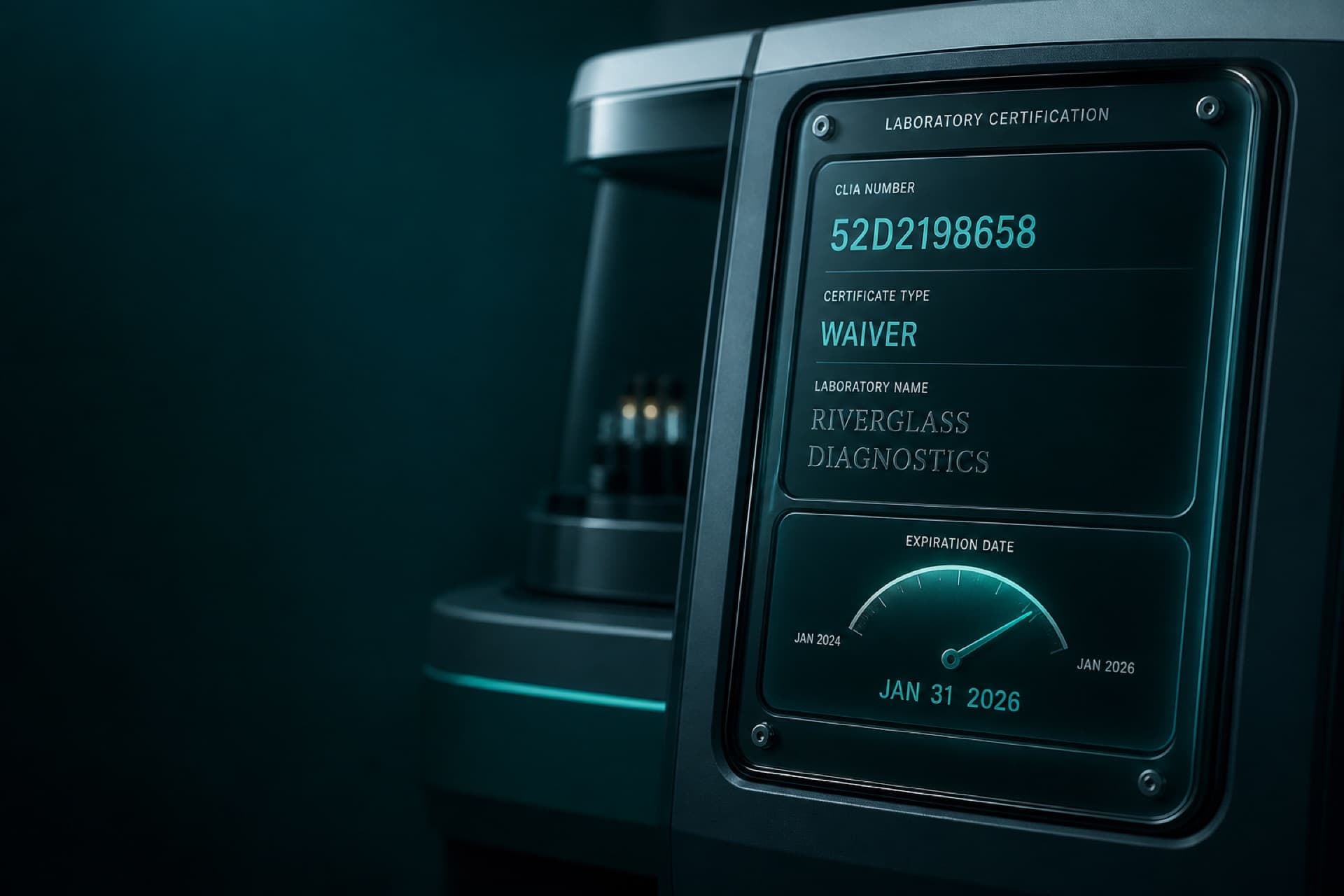
Someone framed last cycle’s CLIA and hung it by the lab door. It looks official. It is also how a diagnostic facility lies to itself. The copy on the wall is not the file CMS would ask for, and it is not the date the laboratory director can stand behind.
Waiver, PPM, moderate complexity — the type still has a cycle. The certificate still has a number, a laboratory name, and an expiration. When that file lives with the director and the calendar lives at the front desk, the first warning is a paused analyzer or a letter nobody wanted.
What the facility has to hold for the lab
- CLIA number and laboratory name as printed on the CMS certificate (kept on the file)
- Document type and issuing authority on the calendar row
- Expiration your team confirmed from this file
- The director who actually renews, by name
A wall certificate is a picture. Coverage is a current file with a confirmed date.
Keep lab coverage on the facility calendar
Do not run a separate lab tracker that operations never sees. CLIA sits beside DEA, site licenses, and device calibrations so an owner can ask one question: what is current? When the new certificate arrives, replace the same row. Retire the framed year in your head.
Questions
Is this the same problem as a lapsed DEA?
No. DEA is a practitioner credential. CLIA is a laboratory credential. Both can stop work, but they live with different people and different paper. Track them as separate rows.
Does CalSafe renew with CMS?
No. It holds the certificate you store and the date your team confirmed. CMS or your accreditor still gets the renewal.