
September 4, 2026 · 5 min read
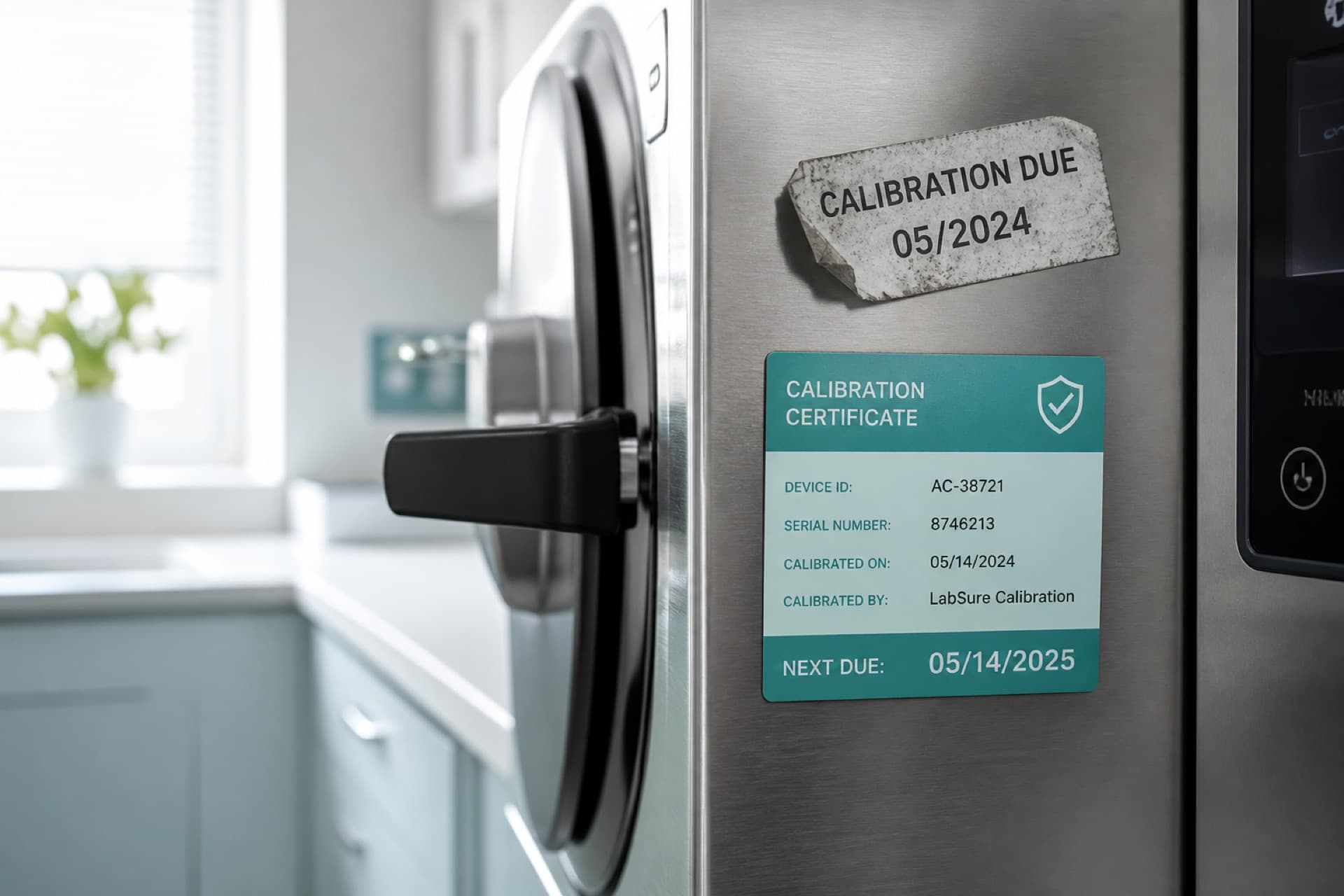
The sticker on the autoclave is not the certificate
The clinic still has to show the device was in interval when it was used. A peeling sticker is not that file.
Operations
Interval lives on the certificate, not the sticker.
Someone slaps a due date on the autoclave. The certificate goes with biomedical, or into a folder named Equipment, or home with the vendor. Six months later a director asks whether the device was in interval. The sticker is worn. The file is not on the calendar.
This is not intake speed. A license on the reception counter is a people problem. Calibration is a device problem that operations still owns. Treat the machine as a credential: name, identifier, next due, current file.
One device. One row. The cert that counts.
- Device name and identifier as printed on the certificate
- Who issued it — biomedical or vendor
- Calibration date and next-due date on this file
- Who schedules the next visit, by name
If the sticker and the certificate disagree, believe the file — once you have confirmed it.
When the next cert arrives, replace the sticker in your head too
Attach the new certificate to the same device. Supersede the old one. The coverage snapshot can include autoclaves and analyzers next to DEA and CLIA so nobody pretends devices live on a different planet.
Questions
Is CalSafe a maintenance system?
No. It does not schedule technicians or parts. It holds the calibration certificate and the next-due date your team confirmed, the same way it holds a license.
What if biomedical keeps the paper?
Photograph it before it leaves the counter. The clinic still has to prove interval. A vendor binder is not the facility calendar.