
September 8, 2026 · 6 min read
A second row is not a renewal
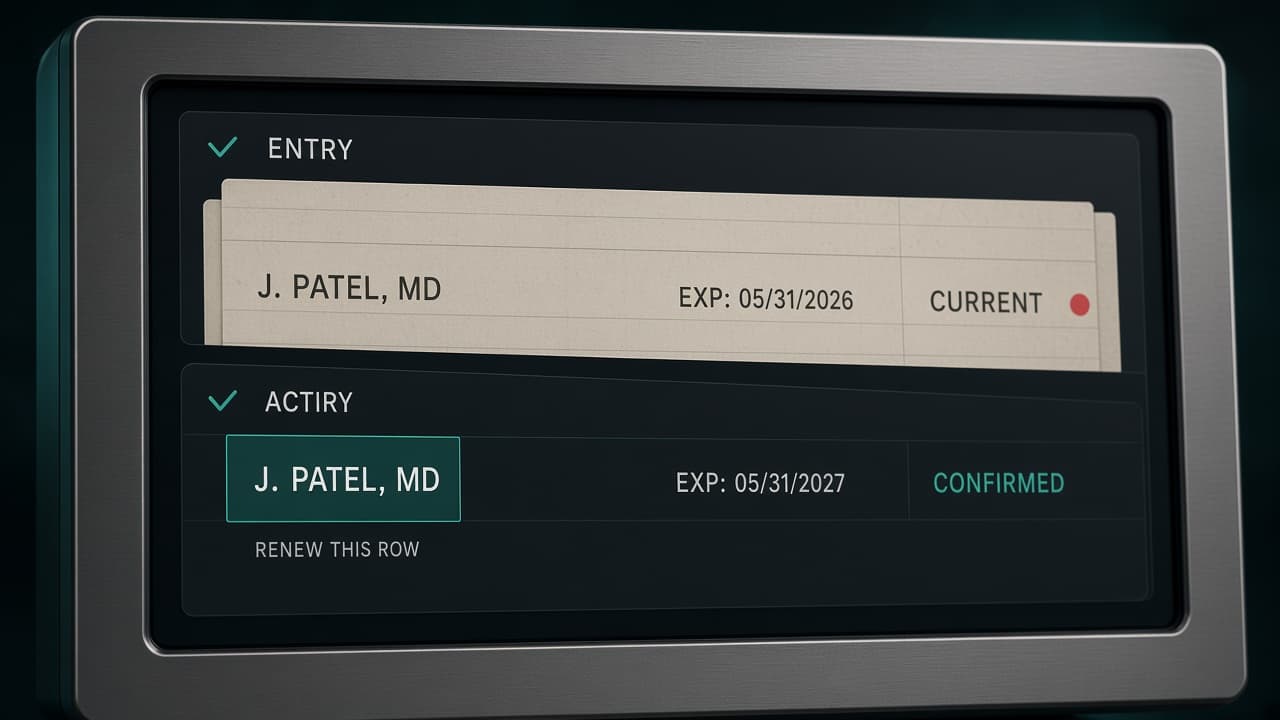
The new PDF arrived. Someone saved it as a new item. The calendar now has two licenses for one person, and nobody can say which date is in force.
Operations
Renew the row. Do not clone the person.
A renewal lands in the inbox. The fastest move is to upload it the way you uploaded the first one: as a new credential. Two minutes later you have two Dr. Patels. Both say current. One of them is last year's file wearing this year's confidence.
This is not a spreadsheet problem. The sheet fails when the date and the PDF live apart. Folders fail the same way when every year is a new filename. Software fails when add is easier than replace. Directors then ask who is covered and get a list that is longer than the schedule.
Renewal is a replace, not an add
- Find the existing row for that person, site, policy, or device
- Attach the new certificate to that record
- Confirm entity, authority, and the new expiry against this file
- Leave the prior file in history as superseded, not as a second current
If you cannot point to one live row, you do not have a renewal. You have a pile with better lighting.
The live list should match the people on the floor
Retiring a clinician who left is the other door. Duplicating a clinician who stayed is this door. Both make coverage look healthier than it is. When the new card arrives, do not start a second person. The calendar should not grow a ghost with a current date.
Questions
Is this the same as the spreadsheet versus the PDF?
No. That failure splits the date from the file. This failure keeps both, twice. You end up with two current rows for one clinician.
Should we delete last year's scan?
No. Supersede it. History stays so you can show what was in force last cycle. The live calendar should show one row.