
September 5, 2026 · 6 min read
Do not learn the policy period from a credentialing desk
Credentialing does not want last year’s scan. It wants the page that is in force. The clinic that cannot produce it does not have an insurance problem yet. It has a filing problem.
Owners
The broker is not your filing cabinet.
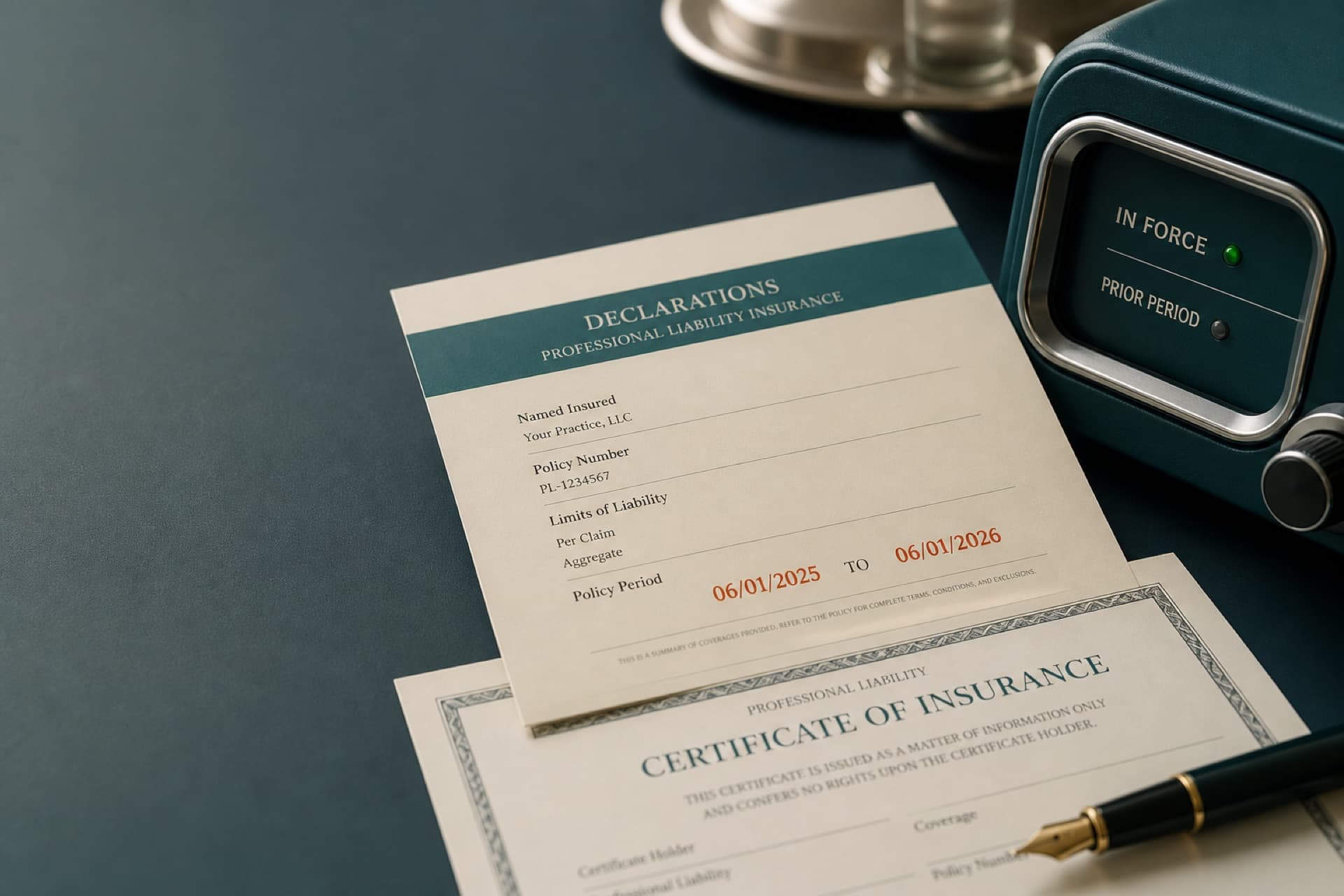
A hospital credentialing office asks for a current certificate of insurance. Operations forwards last year’s declarations page because that is what is in the drive. The broker has the renewal. Three inboxes. No one object called the policy.
This is not a spreadsheet-versus-PDF story. Licenses fail that way. Insurance fails when the only live document sits with someone who does not work at the clinic. You find out on a Tuesday because someone else asked.
What belongs on the clinic’s row
- Named insured as printed — facility or clinician, not both mashed together
- Carrier / issuing authority (policy numbers stay on the PDF for review)
- Period end on the current declarations page
- Who calls the broker, by name
If you cannot attach the page that is in force, you do not have coverage on file. You have a phone tree.
Facility policy and named clinicians are separate rows
Do not merge two insureds because the broker sent one PDF. When the renewal arrives, replace the same policy. Keep the prior page in history so credentialing can see what was in force last cycle without treating it as today’s file.
More notes
Questions
Is this the same as printing coverage for a surveyor?
No. A surveyor asks what is current across the facility. A credentialing desk asks whether this policy is in force, for this named insured, on this date. You still need the current declarations page on the row.
Does CalSafe read tail or retro dates?
No. It tracks the period on the document you store. Tail, retro, and endorsements stay with the broker and counsel.